Comparing Nylon Conveyor Belts with Other Common Belt Materials: A Comprehensive Guide
2026-03-27


Comparing Nylon Conveyor Belts with Other Common Belt Materials
Table of Contents
1. Introduction
2. What is a Nylon Conveyor Belt?
3. Advantages of Nylon Conveyor Belts
3.1 Durability and Strength
3.2 Flexibility and Lightweight Design
3.3 Chemical Resistance and Temperature Tolerance
4. Common Belt Materials: An Overview
Comparing Nylon Conveyor Belts with Other Common Belt Materials
Table of Contents
- 1. Introduction
- 2. What is a Nylon Conveyor Belt?
- 3. Advantages of Nylon Conveyor Belts
- 3.1 Durability and Strength
- 3.2 Flexibility and Lightweight Design
- 3.3 Chemical Resistance and Temperature Tolerance
- 4. Common Belt Materials: An Overview
- 5. Comparison of Nylon with Other Belt Materials
- 5.1 Nylon vs. Rubber Conveyor Belts
- 5.2 Nylon vs. Polyester Conveyor Belts
- 5.3 Nylon vs. Metal Conveyor Belts
- 6. Cost-Effectiveness of Nylon Conveyor Belts
- 7. Applications of Nylon Conveyor Belts
- 8. Maintenance and Care for Nylon Conveyor Belts
- 9. Conclusion
- 10. FAQs
1. Introduction
In the manufacturing and construction sectors, the choice of conveyor belt materials can significantly impact efficiency, durability, and operational costs. **Nylon conveyor belts** have gained popularity due to their unique properties, but how do they stack up against other commonly used belt materials? This guide provides an in-depth comparison, highlighting the strengths and weaknesses of nylon conveyor belts relative to rubber, polyester, and metal conveyor belts.
2. What is a Nylon Conveyor Belt?
Nylon conveyor belts are a type of flexible mechanical belt made from nylon fabric, often embedded with various coatings to enhance their properties. Known for their high tensile strength and resistance to abrasion, these belts are commonly used in diverse industries, including **mining**, **agriculture**, and **manufacturing**. The structure of nylon conveyor belts allows them to handle heavy loads while maintaining flexibility, making them effective for transporting bulk materials over long distances.
3. Advantages of Nylon Conveyor Belts
Choosing nylon conveyor belts offers several benefits:
3.1 Durability and Strength
Nylon is renowned for its exceptional strength-to-weight ratio. This advantage allows nylon conveyor belts to withstand heavy weights without sacrificing performance. The durability also translates into a longer lifespan, reducing the frequency of replacements and downtime.
3.2 Flexibility and Lightweight Design
Nylon conveyor belts are exceptionally flexible, which enables them to navigate around pulleys and other components smoothly. Being lightweight, they reduce the power consumption of conveyor systems, leading to energy savings and lower operational costs.
3.3 Chemical Resistance and Temperature Tolerance
Nylon conveyor belts possess a degree of resistance to various chemicals, making them suitable for industries that handle corrosive materials. Additionally, they can perform well in moderately high-temperature environments, although extreme conditions may require specialized alternatives.
4. Common Belt Materials: An Overview
While nylon is a popular choice, several other materials are frequently used in conveyor systems. Understanding these materials helps clarify when nylon is the best option.
4.1 Rubber Conveyor Belts
Rubber conveyor belts are known for their excellent grip and durability. They are highly resistant to wear and tear but can be heavier than nylon options. These belts excel in applications where traction is a priority, such as in construction and mining.
4.2 Polyester Conveyor Belts
Polyester conveyor belts offer a good balance of strength and flexibility. They are less expensive than nylon but may not match nylon's overall durability. Polyester belts are suitable for general-purpose applications, but they may exhibit more wear when carrying heavy loads.
4.3 Metal Conveyor Belts
Metal conveyor belts provide unmatched strength and durability, making them suitable for high-temperature applications and heavy-duty tasks. However, they are typically more expensive and heavier, which can lead to higher energy costs in conveyor systems.
5. Comparison of Nylon with Other Belt Materials
When evaluating conveyor belts, it is crucial to compare nylon with other materials based on performance, cost, and application suitability.
5.1 Nylon vs. Rubber Conveyor Belts
Nylon belts generally outperform rubber in terms of flexibility and weight. Rubber belts may have better traction in certain applications, but nylon's lighter design often translates to lower energy costs. If your application requires flexibility over grip, nylon is the preferable option.
5.2 Nylon vs. Polyester Conveyor Belts
While both nylon and polyester belts offer flexibility, nylon outperforms polyester in terms of strength and resistance to wear. For applications involving heavy loads or abrasive materials, nylon belts are the superior choice despite being slightly more expensive.
5.3 Nylon vs. Metal Conveyor Belts
Metal conveyor belts excel in handling extreme temperatures and heavy loads, but they are more costly and heavier. In contrast, nylon belts provide a more economical solution for applications that do not require the extreme durability of metal.
6. Cost-Effectiveness of Nylon Conveyor Belts
While nylon conveyor belts may have a higher initial cost compared to polyester, their longevity and reduced need for maintenance often result in a lower total cost of ownership. The efficiency gains from their lightweight design also contribute to significant energy savings over time.
7. Applications of Nylon Conveyor Belts
Nylon conveyor belts are versatile and can be used across various sectors:
- **Mining and Quarrying**: Ideal for transporting heavy materials over long distances.
- **Food Processing**: Used for their chemical resistance and ease of cleaning.
- **Manufacturing**: Suitable for moving goods in assembly lines due to their durability.
- **Agriculture**: Effective for transporting crops and materials in harsh conditions.
8. Maintenance and Care for Nylon Conveyor Belts
To maximize the lifespan of nylon conveyor belts, regular maintenance is essential. Here are some key practices:
- **Regular Inspections**: Check for signs of wear and tear to address issues before they become major problems.
- **Cleaning**: Keep the belts clean to avoid buildup of materials that can cause slippage or damage.
- **Proper Alignment**: Ensure that the belts are properly aligned to prevent unnecessary friction and wear.
9. Conclusion
In summary, nylon conveyor belts present a robust option for various applications within manufacturing and construction. Their superior durability, flexibility, and cost-effectiveness make them an ideal choice over other common belt materials like rubber, polyester, and metal. By understanding the specific needs of your operation, you can determine whether nylon is the optimal solution for your conveyor belt requirements.
10. FAQs
1. What is the lifespan of a nylon conveyor belt?
The lifespan can vary based on usage, but nylon conveyor belts typically last several years with proper maintenance.
2. Can nylon conveyor belts handle heavy loads?
Yes, nylon conveyor belts are designed to handle significant loads due to their high tensile strength.
3. Are nylon conveyor belts resistant to chemicals?
Nylon belts have good resistance to many chemicals, though specific resistance can vary based on the type of chemical.
4. How do I maintain my nylon conveyor belt?
Regular inspections, cleaning, and ensuring proper alignment are essential for maintaining nylon conveyor belts.
5. Are nylon conveyor belts more expensive than rubber belts?
Nylon belts generally have a higher initial cost than rubber belts but may offer better longevity and lower total costs over time.
This detailed examination of nylon conveyor belts compared to other materials provides necessary insights for industry professionals seeking to optimize their conveyor systems for efficiency, durability, and cost-effectiveness.
Keywords:
Latest News
Why do PVC conveyor belts need to be wrapped?
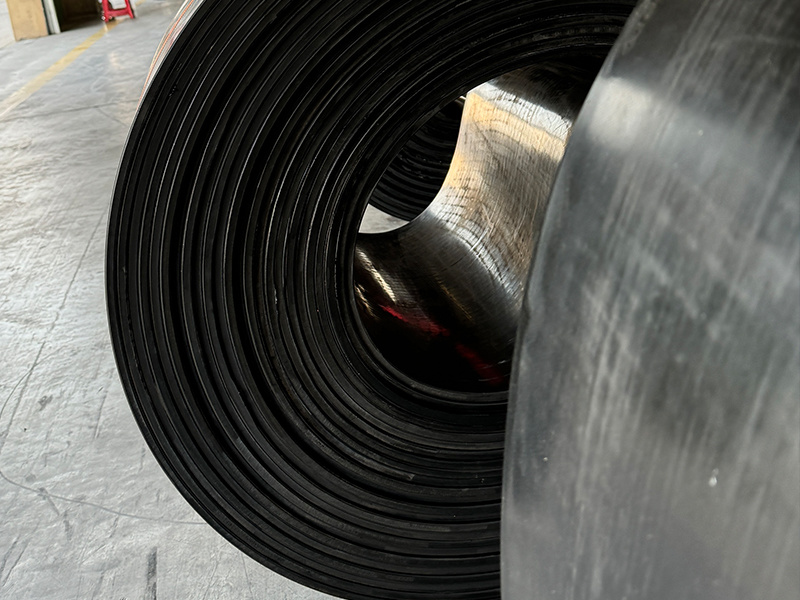
If PVC conveyor belt is to be hemmed, it usually needs 2 cloth and 2 glue or more to be suitable for hemming. First, separate the cloth surface from the glue surface, and then wrap the edge with the glue surface on the surface, so that the hemming is completed. And the use of hot melt process, the edge of the bag and the conveyor belt as a whole.