Understanding Permanent Magnetic Separators in Earthmoving Machinery
2026-06-22


Permanent magnetic separators play a crucial role in the manufacturing and processing machinery industry, particularly in the field of excavation and transportation equipment. Their primary function is to remove ferrous contaminants from bulk materials, ensuring the integrity and efficiency of machinery operations. These separators utilize powerful permanent magnets to attract and hold metallic pa
Permanent magnetic separators play a crucial role in the manufacturing and processing machinery industry, particularly in the field of excavation and transportation equipment. Their primary function is to remove ferrous contaminants from bulk materials, ensuring the integrity and efficiency of machinery operations. These separators utilize powerful permanent magnets to attract and hold metallic particles, which can otherwise cause significant wear and tear on equipment or contaminate the end product.
In industrial settings, the presence of ferrous materials can lead to operational challenges such as equipment damage, increased maintenance costs, and product contamination. By incorporating permanent magnetic separators into manufacturing processes, companies can effectively mitigate these risks. The magnetic separators can be installed in various configurations, including over conveyors, in hoppers, or at the discharge points of bulk materials, making them versatile for different applications in the earthmoving machinery sector.
One of the significant advantages of permanent magnetic separators is their low maintenance requirement. Unlike electric or electromagnetic separators, permanent magnets do not require continuous power supply to operate. This not only reduces energy costs but also minimizes downtime, allowing for smoother operational flows. Additionally, the longevity of permanent magnets ensures that they remain effective over extended periods, providing consistent performance without frequent replacements.
Furthermore, the design of these separators can vary to meet specific application needs. For instance, some models are designed for high-volume processing, while others focus on capturing smaller particles. This adaptability ensures that businesses can find a solution that fits their operational requirements.
In the context of earthmoving machinery, the selection of the right permanent magnetic separator can enhance not only the reliability of the equipment but also the quality of the materials being processed. By ensuring that contaminants are effectively removed, manufacturers can maintain higher standards of production, ultimately leading to improved customer satisfaction.
In conclusion, permanent magnetic separators are an essential component in the manufacturing and processing machinery industry, especially within the realm of excavation and transportation equipment. Their ability to effectively remove ferrous contaminants, combined with low maintenance costs and versatile applications, makes them a valuable asset for any operation seeking to improve efficiency and product quality. As the industry continues to evolve, the adoption of permanent magnetic separators will likely become increasingly crucial in maintaining competitive advantages.
In industrial settings, the presence of ferrous materials can lead to operational challenges such as equipment damage, increased maintenance costs, and product contamination. By incorporating permanent magnetic separators into manufacturing processes, companies can effectively mitigate these risks. The magnetic separators can be installed in various configurations, including over conveyors, in hoppers, or at the discharge points of bulk materials, making them versatile for different applications in the earthmoving machinery sector.
One of the significant advantages of permanent magnetic separators is their low maintenance requirement. Unlike electric or electromagnetic separators, permanent magnets do not require continuous power supply to operate. This not only reduces energy costs but also minimizes downtime, allowing for smoother operational flows. Additionally, the longevity of permanent magnets ensures that they remain effective over extended periods, providing consistent performance without frequent replacements.
Furthermore, the design of these separators can vary to meet specific application needs. For instance, some models are designed for high-volume processing, while others focus on capturing smaller particles. This adaptability ensures that businesses can find a solution that fits their operational requirements.
In the context of earthmoving machinery, the selection of the right permanent magnetic separator can enhance not only the reliability of the equipment but also the quality of the materials being processed. By ensuring that contaminants are effectively removed, manufacturers can maintain higher standards of production, ultimately leading to improved customer satisfaction.
In conclusion, permanent magnetic separators are an essential component in the manufacturing and processing machinery industry, especially within the realm of excavation and transportation equipment. Their ability to effectively remove ferrous contaminants, combined with low maintenance costs and versatile applications, makes them a valuable asset for any operation seeking to improve efficiency and product quality. As the industry continues to evolve, the adoption of permanent magnetic separators will likely become increasingly crucial in maintaining competitive advantages.
Keywords:
Previous
Latest News
Why do PVC conveyor belts need to be wrapped?
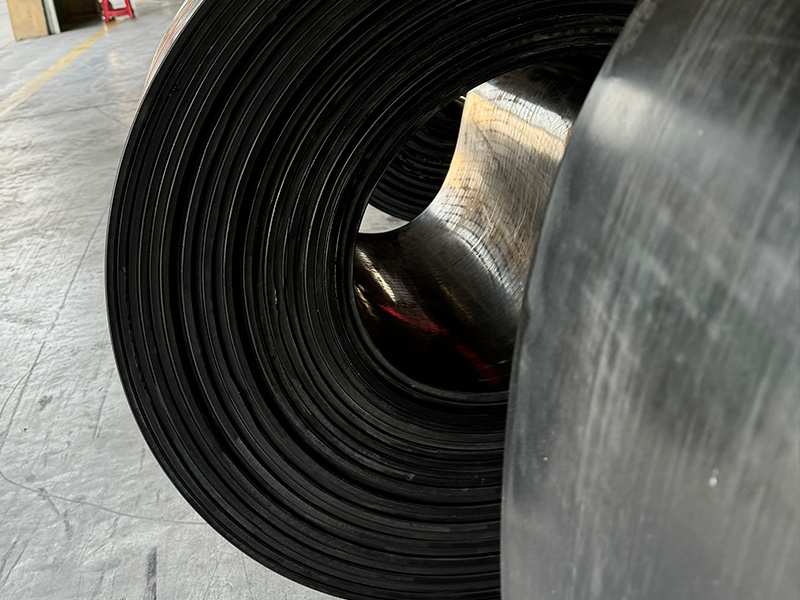
If PVC conveyor belt is to be hemmed, it usually needs 2 cloth and 2 glue or more to be suitable for hemming. First, separate the cloth surface from the glue surface, and then wrap the edge with the glue surface on the surface, so that the hemming is completed. And the use of hot melt process, the edge of the bag and the conveyor belt as a whole.